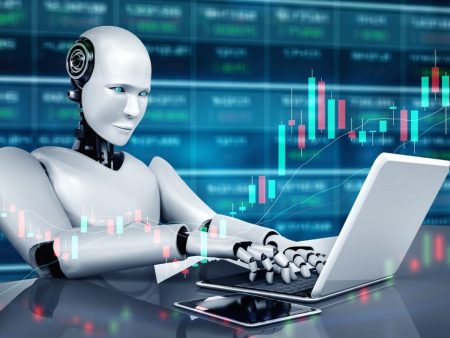
Next-Gen Trading: Hybrid Robots + Human Decision-Making

Next-gen trading blends AI speed with human intuition—hybrid systems that balance automation, judgment, and adaptability.

Home » Next-Gen Trading: Hybrid Robots + Human Decision-Making

Next-gen trading blends AI speed with human intuition—hybrid systems that balance automation, judgment, and adaptability. In the modern markets, speed and intelligence win. Trading is no longer a question of whether humans can outthink machines, or machines can outperform humans—it’s about how they work together. The next generation of trading is hybrid, combining the precision and power of algorithms with the intuition and adaptability of human decision-making.

Next-Gen Trading: Hybrid Robots + Human Decision-Making

Why Pure Automation Isn’t Enough

Algorithmic trading systems, or “robots,” have reshaped financial markets over the last two decades. They dominate in areas where speed, scale, and data-crunching matter most. From high-frequency trading firms to retail bots running on MetaTrader, automation has proven its ability to execute trades faster and more accurately than any human could.

But there are limits.

  • Overfitting & rigidity: Many bots are optimized for past data, and when conditions change, they break down.
  • Black swan vulnerability: No matter how sophisticated, algorithms can’t predict geopolitical events, sudden regulation changes, or pandemics.
  • Sentiment blind spots: Markets are often driven by narratives, emotions, and herd behavior. Bots that rely only on quantitative signals miss these subtleties.

The result? Pure automation often works—until it doesn’t.

The Human Edge

Human traders have weaknesses, emotions, fatigue, and cognitive limits—but they also bring strengths that no machine can replicate.

  • Contextual intelligence: Humans can connect dots across politics, macroeconomics, and cultural trends.
  • Pattern recognition: Traders can identify setups that don’t fit neatly into historical data but “feel right” given the context.
  • Adaptability: Unlike bots locked into code, humans can shift perspectives instantly when a market regime changes.

Think of how traders responded to the 2008 financial crisis or the 2020 pandemic. The traders who succeeded weren’t just running algorithms; they were interpreting chaos, making judgment calls, and adapting faster than rigid systems.

The Hybrid Model: Best of Both Worlds

This is where hybrid trading comes in. Instead of viewing humans and machines as competitors, the hybrid model treats them as collaborators.

Here’s how the balance looks in practice:

  • Speed + Strategy: Robots handle execution, order routing, and data scanning. Humans focus on designing strategies and interpreting market narratives.
  • Risk Control + Creativity: AI enforces strict discipline—sticking to position sizing, stop-loss rules, and portfolio exposure. Humans push the boundaries by testing new ideas and creative plays.
  • Learning Loops: Human feedback trains AI models, making them smarter and more resilient to unusual events.

Real-World Examples of Hybrid Systems

  1. Quant Hedge Funds
    Firms like Renaissance Technologies and Two Sigma rely heavily on algorithms, but their teams of human researchers constantly adjust models, refine signals, and incorporate new datasets. The robots execute—but the humans drive the strategy.
  2. Retail Trading Bots with Oversight
    Platforms like MetaTrader or TradingView let retail traders run automated strategies. Smart traders don’t “set and forget.” They monitor their bots, pausing them during unusual volatility (e.g., elections, central bank meetings) or tweaking them when patterns shift.
  3. Institutional Risk Management
    Some asset managers use AI as a risk sentinel. The system flags anomalies, liquidity crunches, or portfolio exposures, while human managers decide whether to cut, hedge, or double down.

The Road Ahead: Traders as AI Architects

As AI grows more sophisticated, human traders won’t disappear—they’ll evolve. Their role will shift from operators to architects. Instead of manually entering trades, they’ll design, supervise, and improve hybrid systems.

Future traders will:

  • Curate datasets and feed them into AI systems.
  • Train bots to adapt to different market regimes.
  • Serve as “judges of last resort” when AI-generated strategies face uncertainty.

The relationship will look less like a driver vs. autopilot, and more like a co-pilot partnership—with both sides enhancing each other’s strengths.

Conclusion

The next generation of trading won’t be defined by man versus machine, but by man with machine.

The winners will be traders who embrace hybrid models—using robots for what they do best (speed, discipline, data analysis) while reserving human brainpower for judgment, adaptability, and big-picture strategy.

In other words, the future of trading isn’t about outsmarting machines—it’s about collaborating with them.

Also, check out the Reviews we have prepared for you!

Leave a Reply

Your email address will not be published. Required fields are marked *

Advertise with us

Robot Reviews

Purchase Forex Scalping EA Now!
Purchase Happy Gold Now!
Purchase Perceptrader AI Now!