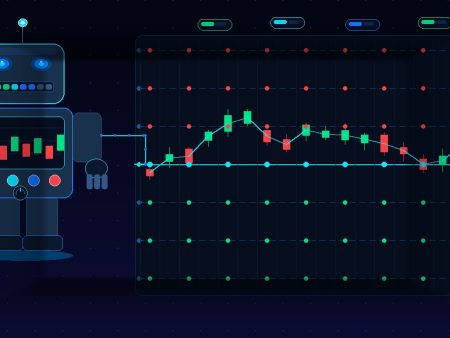
Most forex robots struggle in ranging markets. Find out why performance drops and how to protect your account.


Most forex robots struggle in ranging markets. Find out why performance drops and how to protect your account.

Forex robot performance drops in ranging markets. Learn why this happens and what traders can do about it.
Many traders purchase a forex robot after seeing impressive backtest results or verified live account data. The robot performs well for several weeks, and confidence builds. Then, without any obvious trigger, the equity curve flattens or starts declining. In most cases, the culprit is not a broken algorithm; it is a shift in market structure. Specifically, the robot has moved from a trending environment into a ranging one, and it was never built to handle that change. Understanding why a forex robot’s performance drops in a ranging market is one of the most practical lessons any automated trader can learn.
A ranging market occurs when the price oscillates between a defined support and resistance level without making sustained directional progress. Instead of breaking new highs or lows, the price repeatedly bounces back toward the middle of a channel. This pattern appears across all currency pairs and all timeframes. Furthermore, it can last for hours, days, or even weeks, depending on the pair and the broader macro environment.
Trending markets, by contrast, show clear directional momentum. Price makes higher highs and higher lows in an uptrend, or lower highs and lower lows in a downtrend. Most forex robots, particularly trend-following EAs, generate the majority of their profits during these trending phases. As a result, when the market shifts into a range, those robots begin generating false signals at a much higher rate, and their win rate drops significantly.
Trend-following robots rely on momentum indicators such as moving averages, MACD, or breakout signals to detect the start of a new directional move. In a ranging market, these indicators fire constantly because price repeatedly crosses key levels, but the moves fail to follow through. Consequently, the robot enters a long trade after a bullish signal, only for the price to reverse and hit the stop loss. It then enters a short trade on the next bearish signal, and the same thing happens in the opposite direction.
This cycle, often called “whipsawing,” generates a sequence of small losses that steadily erode the account balance. Moreover, because each loss appears minor, traders often let the robot continue running far longer than they should. By the time the pattern becomes obvious, the drawdown has grown to a level that requires a substantial recovery just to break even. This is one of the primary reasons that forex robot performance deteriorates so sharply during extended ranging market conditions.
It might seem logical that scalping robots, which trade on short timeframes and target small pip gains, would perform better in a range. After all, a range does have two sides, and price moves back and forth between them. In practice, however, scalping EAs face their own unique challenges during these periods.
During a range, spreads often widen as institutional liquidity providers pull back. Additionally, false breakouts increase in frequency, meaning the scalper enters a trade expecting a continuation, only to see the price snap back immediately. Unless the scalping robot includes a specific spread filter or a volatility-based entry condition, it trades just as recklessly in a tight range as a trend follower does in a directionless market. Therefore, the type of robot matters less than whether it includes market-condition awareness built into its logic.
Traders who monitor their robots actively can spot a ranging market before the damage accumulates. The Average Directional Index, commonly known as ADX, provides one of the clearest readings of trend strength. When ADX falls below 20 and flattens, it signals that directional momentum has weakened, and a range is likely developing. In addition, Bollinger Bands that contract and run parallel to each other rather than expanding indicate that volatility has compressed, and breakout-style trading carries elevated risk.
Equally important is reviewing the robot’s recent trade log. If the EA produces a high number of trades that open and close near the same price level, or if stop losses are being hit at an unusual rate while the account shows no net progress, those patterns indicate a ranging environment. Recognizing these signals early allows traders to pause the robot before a moderate drawdown turns into a serious one.
The most straightforward step is to pause the robot manually when ADX consistently reads below 20 on the primary trading timeframe. This requires monitoring the account regularly, but it directly addresses the core problem. Some traders set a weekly review schedule where they check the ADX reading and the robot’s recent win rate together before deciding whether to let it continue trading.
Beyond manual oversight, several modern EAs include a built-in trend filter that reads ADX or a similar indicator before approving each trade. When the filter detects a ranging market, it skips the signal entirely rather than executing a low-probability entry. This automated approach removes the need for constant manual supervision and keeps the robot aligned with the conditions in which it performs best. Consequently, the equity curve stays far smoother over time compared to a robot running without any market-condition filter.
Another effective approach involves running two separate EAs simultaneously, one trend-following and one mean-reversion. Mean-reversion robots specifically target the bounce behavior that defines a ranging market. They buy near support and sell near resistance, which is precisely the opposite of what a trend follower does. By combining both types, traders maintain active strategies regardless of the market trends or ranges. Nevertheless, this approach requires careful attention to position sizing so that both robots do not open conflicting trades at the same time on the same pair.
When evaluating a new EA, traders should specifically examine the verified live results during periods when the market was ranging rather than trending. A robot that shows a smooth equity curve across all market conditions almost certainly includes some form of market-state detection. In contrast, a robot whose live results show sharp drawdown spikes followed by recoveries likely suffered during ranging periods and recovers only when trending conditions return.
Furthermore, developer documentation that explains how the robot handles low-ADX or low-volatility environments provides valuable insight into its design quality. Developers who address this issue directly demonstrate a deeper understanding of real market behavior compared to those who only present favorable backtest periods. Asking this specific question in a support channel before purchasing an EA can save traders a significant amount of time and capital.
Ranging markets are among the most common and most damaging challenges that forex robot traders face. Most EAs generate their strongest returns during trending conditions and suffer during extended consolidation phases. Recognizing the signs of a ranging market, understanding why robot performance drops during those periods, and taking concrete steps to either pause the robot or switch to a complementary strategy makes the difference between a consistent equity curve and a frustrating cycle of gains and losses.
Ultimately, no robot performs well in every market condition. However, traders who understand the relationship between market structure and robot behavior take a far more informed and controlled approach to automated trading, and that knowledge alone gives them a meaningful edge over those who press start and hope for the best.
Also, take a look at the Reviews we have prepared for you!