Emotions sabotage trading decisions. Discover how algorithmic robots remove fear and greed, making trades smarter and faster.


Emotions sabotage trading decisions. Discover how algorithmic robots remove fear and greed, making trades smarter and faster.

Emotions sabotage trading decisions, and how algorithmic robots remove fear and greed, making trades smarter and faster. Markets reward discipline, yet human beings are wired for anything but. Trading compresses uncertainty, risk, and reward into rapid decisions, conditions under which emotions predictably override logic. This is why even well-trained traders can implode during volatility, while algorithmic systems remain consistent.
Loss aversion
Humans experience losses more intensely than gains. This leads to cutting winners too early and holding losers too long. The result is asymmetrical risk, small gains, large losses.
Fear of missing out
Sharp moves trigger impulsive entries without proper confirmation. Traders chase prices rather than execute planned setups.
Overconfidence
A streak of wins can distort perception of risk. Position sizes creep up, risk rules loosen, and one adverse move erases weeks of gains.
Revenge trading
After a loss, many traders attempt to “make it back” immediately. This state produces reckless trades that deviate from any defined strategy.
Paralysis under uncertainty
When volatility spikes, emotions can stall decision making entirely, causing missed opportunities or late exits.
Human psychology evolved for survival, not for probabilistic decision systems like financial markets.
No emotional bias
Robots do not experience fear, hope, overconfidence, or regret. They execute rules identically regardless of recent wins or losses.
Consistent adherence to strategy
An algorithm follows predefined conditions with perfect discipline. It never deviates from the system based on mood or stress.
Instant execution
Where humans hesitate or second-guess, machines execute the moment criteria are met. Speed eliminates many discretionary errors.
Superior data processing
Algorithms can evaluate multiple indicators, datasets, and correlations in milliseconds. Humans cannot reliably process large data streams during market pressure.
Risk control by design
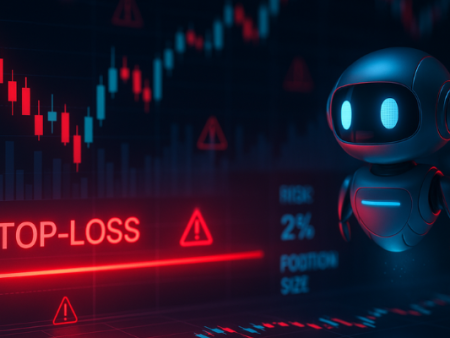
Stops, position sizing, and exposure limits can be hard-coded. This prevents common emotional mistakes: doubling down, removing stops, oversized positions, and panic exits.
Backtesting and optimization
Algo strategies can be validated with historical data, revealing statistical edge before live deployment. Human intuition alone cannot match that evidence-based rigor.
Robots solve emotional execution, not strategy quality. A poorly designed system will still lose money, just consistently. Successful automation requires:
The most resilient trading models pair human creativity with robotic execution. Humans excel at research, pattern recognition, macro reasoning, and strategy design. Robots excel at enforcing discipline, speed, and precision.
Emotions will always impair human traders because markets exploit psychological weaknesses. Robots succeed because they eliminate them.
Also, check out the Reviews we have prepared for you!