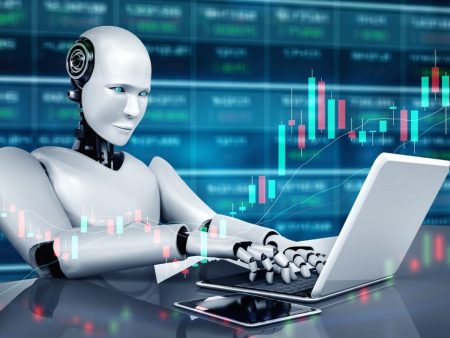
The hidden psychology behind letting a robot trade for you: fear, trust, control, and the freedom it brings.


The hidden psychology behind letting a robot trade for you: fear, trust, control, and the freedom it brings.

Discover the psychology behind letting a robot trade for you, handle your investments, trust, control, and emotions in automated trading.
In the fast-paced world of financial markets, where fortunes are made and lost in the blink of an eye, the idea of letting an algorithm, a trading robot, make decisions for you can feel both exhilarating and unnerving. Automated trading is no longer the domain of hedge funds and quants alone. Increasingly, everyday traders and investors are trusting algorithms with their money. But behind the screens and code, there’s an underexplored aspect: the psychology of letting a robot trade for you.
Humans Are Emotional, Markets Are Brutal
At its core, trading is a battle between logic and emotion. Our brains evolved to make quick decisions for survival, but that ancient wiring can work against us in modern markets. Fear, greed, and the powerful need for control often sabotage sound strategy.
That’s why automated trading holds such appeal. Robots don’t panic when the market crashes. They don’t get euphoric during a bull run. They follow pre-set rules, executing trades with cold, unbiased precision.
The Illusion of Control
One of the greatest psychological hurdles for traders is giving up control. Humans naturally crave agency; pressing the buy or sell button gives a sense of power. Algorithms strip this away, and that can feel unsettling.
Studies show that investors often override algorithms during periods of high volatility, even though the algorithm may perform better in the long run. It’s the same reason airline passengers sometimes fear autopilot, despite it being far safer than a human pilot flying alone.
Trust Issues: The Black Box Dilemma
Another source of anxiety is the so-called “black box” nature of many trading bots. Not understanding how your robot works can amplify mistrust. Is it making the right call? Did you set it up correctly? Is it reacting to new market conditions?
This psychological discomfort is why transparency and education are critical. When traders know the logic behind their bot its strategies, risk parameters, and fail-safes, they’re more likely to trust it and stick with the plan during drawdowns.
The Comfort of Rules
Interestingly, some traders find comfort in the discipline a robot provides. Algorithms can act like a protective barrier between you and your worst impulses. They enforce stop-losses and profit targets without second-guessing. For many, this structure reduces stress and improves long-term performance.
In this sense, trading bots are not about giving up control; they’re about redefining it. You control the strategy; the robot controls the execution.
Overconfidence and Automation Bias
While robots reduce emotional trading, they can also lead to overconfidence. Some traders believe that because they’re using sophisticated automation, they no longer need to monitor performance or adapt to changing market conditions. This is dangerous. Algorithms are only as good as the data and assumptions they’re built on.
On the flip side, there’s “automation bias,” the tendency to blindly trust machines over human judgment, even when they make mistakes. Striking a balance between trust and oversight is key.
The Takeaway
Letting a robot trade for you is not just a technical decision; it’s a deeply psychological one. It challenges your need for control, your ability to trust, and your emotional resilience during market swings.
The best traders know this: automation works best when combined with self-awareness and discipline. You design the system, set the guardrails, and trust the robot to do its job, but you also keep learning, adapting, and improving your strategy.
In the end, perhaps the greatest benefit of automated trading is not just better returns. It’s the freedom it gives you: freedom from emotional roller coasters, impulsive mistakes, and the constant stress of watching every tick on the screen.
A robot can’t make you rich overnight, but it can help you outsmart the one opponent you’ve always struggled to beat: yourself.
Also, check out the Reviews we have prepared for you!