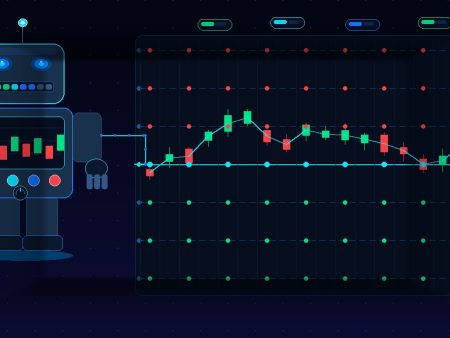
Improving robot trading skills requires systematically analyzing these mistakes and refining models, infrastructure, and risk controls.


Improving robot trading skills requires systematically analyzing these mistakes and refining models, infrastructure, and risk controls.

Automated trading systems operate at the intersection of data science, market microstructure, and software engineering. While robot trading removes emotional bias from execution, it does not eliminate error. In fact, many failures in algorithmic trading stem from hidden technical assumptions rather than obvious strategic flaws. Improving robot trading skills requires systematically analyzing these mistakes and refining models, infrastructure, and risk controls.
This article examines common technical mistakes in robot trading and outlines methods to convert them into measurable improvements.
A frequent technical error is assuming stationarity in financial time series. Most strategies are designed under the implicit assumption that historical relationships persist.
In practice, markets shift between regimes such as:
Robots that do not adapt to regime changes often degrade silently. Improving performance requires:
Mistakes here reveal the need for adaptive systems rather than single-model solutions.
One of the most damaging technical mistakes is overfitting during backtesting. Excessive parameter tuning can create strategies that perform exceptionally well in historical data but fail catastrophically in live markets.
Common signs of overfitting include:
Technical improvements include:
A poor live result often indicates the model learned noise rather than signal.
Many algorithmic strategies fail not because of flawed signals, but because execution costs were underestimated or ignored.
Key execution-related mistakes include:
Improvement requires integrating microstructure modeling into simulations:
A technically sound strategy must survive real-world frictions, not just theoretical returns.
From a systems perspective, risk management is not a constraint—it is a core algorithmic component. A common mistake is embedding risk rules as static limits instead of dynamic functions.
Technical enhancements include:
Losses caused by risk failures often expose inadequate feedback loops between performance metrics and execution logic.
Many traders deploy robots without adequate observability. When performance deteriorates, they lack the data to diagnose the cause.
Technical monitoring should include:
Mistakes often highlight missing telemetry rather than strategy flaws.
Automated systems are only as good as their data. Subtle data errors can lead to persistent mispricing or false signals.
Common technical data mistakes:
Improving robot trading skills requires robust data pipelines with validation, normalization, and auditing at every stage.
Successful algorithmic trading systems evolve through controlled iteration. A mistake becomes valuable only when it feeds back into the development process.
A technical improvement cycle typically includes:
This engineering mindset transforms errors into systematic refinements.
Mistakes in robot trading are rarely random. They are signals pointing to weaknesses in modeling assumptions, execution logic, data quality, or system architecture. By analyzing failures at a technical level—using statistical diagnostics, robust testing, and continuous monitoring—traders can steadily improve their automated systems.
In algorithmic trading, mastery is not achieved by eliminating mistakes, but by designing systems that detect, measure, and learn from them faster than market conditions change.
Also, check out the Reviews we have prepared for you!