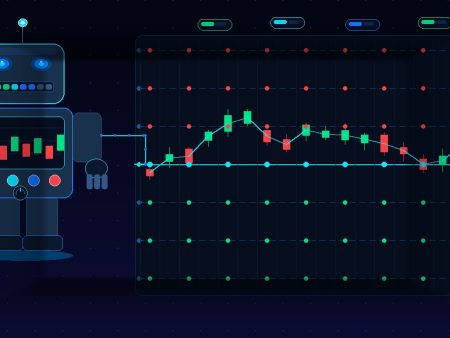
Learn how evaluating market trends and volatility improves FX robot performance, leading to smarter strategy adjustments and stronger results.


Learn how evaluating market trends and volatility improves FX robot performance, leading to smarter strategy adjustments and stronger results.

Enhance FX robot performance by analyzing market trends, volatility, and conditions to optimize automated trading strategies for consistent profits. In the fast-moving world of foreign exchange, even the most sophisticated trading robot can struggle without a clear understanding of market conditions. Many traders assume that installing an FX robot and letting it run is enough, but consistent profitability requires more. Robots depend on rules, and those rules perform differently under varying market environments.
By learning how to analyze market conditions before enabling or adjusting your FX robot, you can dramatically improve performance, reduce drawdowns, and strengthen long-term consistency.
Every FX robot is built around a strategy—trend-following, scalping, grid, martingale, mean-reversion, breakout trading, or volatility-based systems. Each of these strategies excels under specific conditions:
If the robot’s strategy doesn’t match the market environment, performance declines. The key is aligning your bot’s logic with the current or expected market condition.
Before running any trend-based robot, identify whether the market is actually trending. Tools like:
If ADX is low, the market is ranging, trend robots may produce false signals, while grid or mean-reversion bots may perform better.
Volatility directly affects stop-loss placement, trade frequency, and risk.
Indicators and tools:
Match your robot’s risk settings to current volatility to avoid unexpected spikes.
FX robots behave differently during each trading session:
Tracking session behavior helps you enable or pause certain robots strategically.
Even the smartest FX algorithm cannot predict news spikes. Major events include:
High-impact news can ruin scalping strategies or grid systems but may benefit breakout robots. A simple rule is to pause sensitive robots during news or use built-in filters.
Is the market consolidating or preparing for a breakout?
Market structure analysis helps determine which robot type is most appropriate.
Many robots allow adjusting:
Regular tuning based on volatility and trend conditions improves performance.
Instead of relying on one robot, run multiple specialized robots:
This creates a balanced portfolio that adapts to changing market behavior.
Forward-test and backtest your robot in:
Understanding which conditions produce the highest ROI allows you to deploy your robot selectively.
Modern trading platforms offer tools to detect:
Adding these filters to your robot or using them before enabling the bot leads to smarter, condition-based trading.
Analyzing market conditions isn’t about replacing your FX robot—it’s about empowering it. When your robot’s strategy matches the market environment, performance becomes more stable and predictable. You reduce unnecessary risk, avoid low-probability trades, and capitalize on ideal trading moments.
FX robots are powerful tools, but only when used with market awareness. The better you understand market conditions, the better your robot will perform.
Also, take a look at the Reviews we have prepared for you!