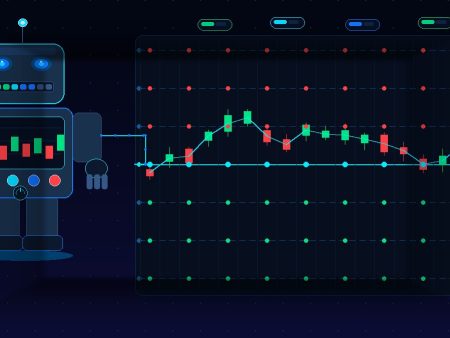
Trend following gives forex robots their biggest winning trades by entering early in a move and riding it with discipline.


Trend following gives forex robots their biggest winning trades by entering early in a move and riding it with discipline.

Trend-following strategies power the most successful forex robots by capturing sustained directional moves with disciplined entries and trailing exits.
Trend following represents the most widely deployed strategy category among forex robots in live trading. The core logic is straightforward: identify when a currency pair is moving in a sustained direction, enter a trade aligned with that direction, and hold the position as long as the trend continues, exiting only when the trend shows clear signs of exhaustion or reversal. While the principle sounds simple, executing it with discipline across hundreds of trades and varied market conditions is where automated systems carry a significant advantage over manual traders who second-guess their exits during normal retracements.
Trend following robots generate their account growth from a specific trade profile: a relatively low win rate offset by winning trades that are substantially larger than losing ones. A well-designed trend-following EA might win only 40% of its trades but still produce a strongly positive equity curve because each winner, captured during a genuine trending move, returns three or four times the amount lost on the smaller, more frequent losing trades that occur during choppy, directionless periods. This asymmetry between win size and loss size, expressed as a favourable risk-to-reward ratio, forms the mathematical foundation on which every trend following strategy depends for its long-term profitability, and understanding it helps traders evaluate trend-following EAs more accurately than win rate figures alone ever could.
Trend following robots detect directional momentum using a combination of price-based indicators that smooth out short-term noise and reveal the underlying direction of price movement. Moving averages rank as the most widely used trend identification tool in automated trading. A simple approach, comparing a fast moving average against a slow one and entering when the fast crosses above or below the slow, captures the beginning of a directional move with a lag that filters out most false signals generated by brief, erratic price spikes.
The Moving Average Convergence Divergence indicator, known as MACD, builds on moving average logic by measuring the distance between two exponential moving averages and generating entry signals when that distance expands in a consistent direction. Many trend-following EAs use MACD as a momentum confirmation tool rather than a standalone entry signal, requiring the MACD histogram to show expanding positive or negative bars before approving an entry in the corresponding direction. Additionally, the Average Directional Index, known as ADX, measures trend strength without indicating direction, readings above 25 signal that a trend has sufficient momentum to merit a trend-following trade, while readings below 20 indicate a ranging market where trend-following entries carry a lower success probability. Combining a directional indicator with ADX confirmation gives trend-following robots a structured way to distinguish genuine trending conditions from the directionless chop where their entry logic generates the most losing trades.
Identifying that a trend exists differs from identifying the right moment to enter it. A trend following robot that enters immediately on every moving average crossover often buys near short-term highs within the trend and sells near short-term lows, giving back a portion of the anticipated move to an initial retracement before the trend resumes. More sophisticated trend-following EAs add a pullback entry condition, waiting for price to retrace to a defined level within the trend before executing the trade rather than chasing the initial breakout.
A common pullback entry technique uses a faster moving average as a dynamic support or resistance level within the trend. In an uptrend identified by the slower moving average alignment, the robot waits for price to pull back to the faster moving average before entering long. This approach typically produces a better entry price than the initial crossover, a tighter stop loss distance relative to the target, and a more favourable risk-to-reward ratio on each individual trade.
Furthermore, entering on a pullback rather than a breakout reduces the frequency of trades opened during false breakouts. These brief, one-directional moves reverse quickly without developing into the sustained trend the entry logic anticipated. Over a large sample of trades, this discipline in entry timing compounds into a meaningfully better average risk-to-reward ratio than a simple crossover entry produces, even when both approaches use the same trend identification logic to define the directional bias.
Holding a winning trade through a sustained trend requires a trade management approach that balances two competing objectives simultaneously: giving the position enough room to develop without exiting prematurely, and protecting accumulated gains from a sharp reversal that erases profit before the robot closes the trade. Trend following robots address this balance primarily through trailing stops and dynamic exit signals rather than fixed take profit levels.
A trailing stop moves the stop loss in the direction of the trade as price advances, locking in a growing portion of accumulated profit while still allowing the position to continue running. A 30-pip trailing stop on a long trade, for example, rises with price as EUR/USD climbs, at no point risking more than 30 pips of accumulated gain from the highest price reached. When the trend eventually reverses by 30 pips, the stop triggers and the robot exits with the locked-in profit rather than waiting for the full take profit level to fill.
ATR-based trailing stops improve on fixed-distance trailing by scaling the stop distance to current market volatility. During a low-volatility period within the trend, the trailing stop tightens, protecting more gain from a reversal. During a high-volatility expansion phase, it widens, avoiding a premature exit from a normal volatility spike that immediately resumes in the trend’s direction. Consequently, ATR trailing stops allow trend following robots to stay in strong moves through volatile intraday fluctuations while still exiting efficiently when the trend’s momentum genuinely exhausts, producing larger average winners than fixed trailing distances typically achieve.
Every trend following robot faces its most difficult operating conditions during extended ranging periods when no sustained directional momentum exists. Moving average crossovers fire repeatedly as price oscillates back and forth across the average without committing to a direction. Each crossover generates an entry, the trade moves briefly in the anticipated direction, then price reverses and hits the stop loss before any meaningful trend develops. This pattern, sometimes called whipsawing, produces a sequence of small, frequent losses that erode the account’s gains from previous trending periods.
The ADX filter described earlier directly addresses this problem by preventing the robot from opening new trades when trend strength falls below the threshold that indicates a genuine directional move. An ADX reading below 20 signals that price is moving without directional conviction, and a well-configured trend-following robot respects that signal by pausing new entries until the ADX recovers to a level that indicates renewed momentum. Additionally, aligning the robot’s active trading hours with sessions historically associated with strong directional activity, particularly the London session and the London-New York overlap, reduces exposure to the lower-volume, range-bound periods that produce the majority of whipsaw losses. Traders who track their trend-following EA’s performance by session often find that a significant proportion of the strategy’s losing trades cluster in specific low-volume windows, which a simple session filter can remove without materially reducing the robot’s exposure to genuine trending opportunities.
Trend following robots operate across a wide range of timeframes, and the timeframe selection shapes every aspect of the strategy’s behaviour, from trade frequency and typical holding period to stop loss distance and average profit target. Lower timeframe trend following robots, operating on the M15 or H1 chart, generate more frequent entries and hold trades for hours rather than days. Higher timeframe robots operating on the H4 or Daily chart generate fewer but potentially larger trades, holding positions through multi-day moves while tolerating wider stops calibrated to the larger price swings on those timeframes.
Lower timeframe trend following suits traders who prefer more frequent feedback and shorter exposure windows per trade. The trade-off is a higher sensitivity to short-term noise, which produces more false trend signals and requires tighter filtering to maintain a positive expectancy. The higher timeframe trend following produces fewer but cleaner signals with wider stops and larger profit targets, demanding more patience and a larger account buffer to absorb the wider stop distances without exceeding the trader’s acceptable risk percentage per trade. Neither approach is inherently superior, the right timeframe depends on the account size, the trader’s preference for trade frequency, and whether the target currency pairs show more reliable trends on shorter or longer timeframes, which historical data can confirm before any live deployment.
Trend following remains the dominant strategy category among professionally designed forex robots for a reason grounded in market reality: currency pairs produce sustained directional moves with enough regularity and magnitude to generate a positive expectancy for strategies that capture them efficiently. The approach does not win the majority of its trades, it wins the right ones, at the right size, with the discipline to hold them long enough to collect the asymmetric returns that define trend following’s mathematical edge.
Traders who evaluate trend-following EAs with a clear understanding of this trade profile, expecting a win rate below 50% alongside a profit factor driven by large, infrequent winners, assess these robots far more accurately than those who compare win rates across different strategy categories without accounting for risk-to-reward differences. A trend-following robot with a 38% win rate and a 1:3 average risk-to-reward ratio carries a stronger positive expectancy than a mean-reversion robot with a 65% win rate and a 1:0.8 ratio, and recognising that distinction separates traders who build sustainable automated accounts from those who chase headline statistics that do not reflect how each strategy actually makes its money.
Also, take a look at the Reviews we have prepared for you!