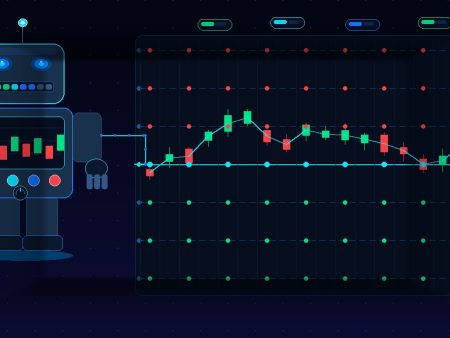
Mean reversion forex robots profit by fading extreme price moves, buying dips and selling spikes in range-bound market conditions.


Mean reversion forex robots profit by fading extreme price moves, buying dips and selling spikes in range-bound market conditions.

Mean reversion strategies give forex robots a contrarian edge by buying weakness and selling strength in oscillating market conditions.
Most forex robot strategies follow the market — they buy when price rises and sell when it falls, aiming to ride directional momentum in the direction of an established trend. Mean reversion strategies take the opposite position. A mean reversion forex robot buys when price has fallen sharply and appears statistically oversold, and sells when price has risen sharply and appears statistically overbought. The core assumption is that extreme short-term deviations from a currency pair’s average price tend to correct back toward that average over time — and the robot profits from that corrective move rather than from a sustained directional trend.
This contrarian approach suits a specific and important characteristic of forex markets: the majority of price activity on most currency pairs occurs within a defined range rather than in extended directional trends. Academic research on forex price behaviour consistently shows that major pairs spend more time oscillating around a mean than trending away from it over any given trading period. Forex robots built on mean reversion logic therefore operate in harmony with this statistical reality, taking trades precisely when price has deviated far enough from the average to offer a high-probability reversal opportunity. Understanding how these robots identify entry signals, manage risk on the wrong side of a strong move, and select the conditions that maximise their edge provides a complete picture of one of automated trading’s most statistically grounded strategy categories.
Mean reversion rests on a statistical concept called regression to the mean — the tendency for extreme values in any data series to move back toward the long-term average over time. Applied to forex prices, this principle suggests that when EUR/USD trades significantly above or below its recent average price, the probability of a move back toward that average exceeds the probability of a continued move further away from it.
Traders quantify this deviation using statistical tools such as standard deviation bands, z-scores, and oscillators like the Relative Strength Index. When price moves more than a defined number of standard deviations away from a moving average — a condition that Bollinger Bands display visually — the deviation qualifies as statistically extreme and a mean reversion robot treats it as a potential entry signal. The robot does not need to predict which catalyst will cause the reversal. It simply needs the statistical distribution of past price behaviour to hold going forward, making mean reversion one of the few forex strategies grounded in a mathematical principle rather than subjective market interpretation. Furthermore, because the same statistical patterns appear across multiple timeframes and currency pairs, well-designed mean reversion robots can apply their logic consistently across a broad universe of instruments without requiring pair-specific customisation beyond basic parameter adjustments for volatility differences.
Mean reversion robots rely on indicators that measure how far price has deviated from a central reference point — typically a moving average — rather than indicators that measure directional momentum. Three tools appear most commonly in professionally designed mean reversion EAs: Bollinger Bands, the Relative Strength Index (RSI), and the Commodity Channel Index (CCI).
Bollinger Bands place two standard deviation bands above and below a 20-period moving average. When price touches or closes beyond the outer band, the robot interprets the move as statistically extreme and looks for a reversal entry back toward the middle band. A touch of the lower band triggers a buy signal; a touch of the upper band triggers a sell. The middle band then serves as a natural take profit target, since returning to the average represents the mean reversion the strategy anticipates.
RSI measures the speed and magnitude of recent price changes on a scale from 0 to 100. Readings below 30 indicate an oversold condition — the robot buys. Readings above 70 indicate an overbought condition — the robot sells. Mean reversion EAs often combine RSI with Bollinger Bands, requiring both indicators to confirm an extreme reading simultaneously before executing a trade. This dual confirmation reduces false entries that arise when a strong trend pushes either indicator into an extreme zone repeatedly without reversing, which represents the primary risk that single-indicator mean reversion systems face during trending market conditions. Consequently, combining multiple confirmation tools significantly improves entry quality on live accounts.
Mean reversion robots produce their strongest results during sideways, range-bound market conditions where no sustained directional bias exists. When EUR/USD oscillates within a 60-pip range across an entire trading session, the robot repeatedly fades the extremes of that range — buying the bottom, selling the top, and collecting small consistent profits on each reversal cycle. The more defined and stable the range, the higher the probability that each extreme touch will produce the anticipated reversal, and the more reliably the mean reversion robot generates completed profitable trades.
Low-volatility periods during the Asian session, intraday consolidation phases following a major directional move, and the hours between significant economic data releases all create the contained, oscillatory price behaviour that mean reversion strategies target. During these windows, institutional participants often trade within a defined range as they await the next catalyst, and retail price action reflects that contained activity. Additionally, currency pairs that naturally show lower trending tendency and higher mean-reverting behaviour — such as EUR/GBP and certain commodity pairs during quiet periods — suit mean reversion robots better than highly directional pairs like USD/JPY during a risk-driven macro trend. Selecting the right pair for a mean reversion EA matters as much as selecting the right market conditions, because the statistical assumption the strategy depends on holds more reliably on some instruments than others over any given time period.
The central risk of every mean reversion strategy is the scenario where price does not revert after reaching an extreme — where it continues moving further in the same direction instead. This situation arises most commonly when a strong fundamental catalyst drives a sustained trend, overriding the short-term statistical tendency toward reversion. A central bank interest rate surprise, an unexpected geopolitical event, or a significant shift in risk sentiment can push price far beyond any statistically defined extreme and keep it there for an extended period.
A mean reversion robot that enters a buy trade on a Bollinger Band touch during such a trend faces an expanding loss as price continues lower rather than reversing. The robot’s entry logic correctly identified a statistical extreme — but the market’s fundamental reality overrode the statistical pattern. This outcome represents the primary reason that mean reversion robots require carefully calibrated stop losses that limit the loss on any single failed reversion trade to a level the account can absorb without damaging the strategy’s ability to continue operating.
Furthermore, extended trending periods can produce a sequence of false reversion signals before the actual reversal occurs, generating multiple small losses in rapid succession. Mean reversion robots that include a trend filter — which checks whether the broader directional context on a higher timeframe supports a counter-trend entry — avoid many of these false signals by declining to trade when the higher timeframe trend actively works against the reversion premise. This filter does not eliminate all losing trades, but it significantly reduces the frequency of entries made directly into a strong, ongoing trend.
Stop loss placement on mean reversion trades requires a different logic than stop placement on trend-following trades. A trend-following robot places its stop below a recent swing low or above a recent swing high — a logical invalidation point for the directional thesis. A mean reversion robot, by contrast, enters at a price extreme and expects the market to reverse from that point. Placing the stop too close to the entry risks a normal volatility spike triggering the exit before the reversal develops. Placing it too far away creates an unfavourable risk-to-reward ratio that requires an unrealistically high win rate to produce a positive expectancy.
Most mean reversion robots use ATR-based stop placement, sizing the stop distance as a multiple of the pair’s current Average True Range. A stop set at 1.5 to 2.0 times the ATR gives each trade enough room to tolerate normal price noise while still defining a clear maximum loss that the account can absorb. Additionally, some mean reversion robots use a time-based exit alongside the price-based stop — closing any trade that has not reached its take profit target within a defined number of bars or hours, regardless of where price sits at that moment. This time stop prevents the account from having capital locked in a stagnant trade indefinitely, freeing margin for the next signal while accepting a small loss or break-even outcome on a position that failed to produce the anticipated reversion within a reasonable timeframe.
Mean reversion strategies give forex robots a statistically grounded way to profit from the price behaviour that defines the majority of forex market activity — oscillation around a mean rather than sustained directional movement. By buying at statistically extreme lows and selling at statistically extreme highs, mean reversion EAs operate with the mathematical tendency of price distribution on their side, rather than against it. The strategy performs most reliably during ranging conditions, requires careful stop placement to survive the minority of cases where price continues trending through the extreme rather than reversing from it, and benefits significantly from a higher timeframe trend filter that avoids entries directly into strong directional moves.
Traders who understand both the strength and the vulnerability of mean reversion logic — and who configure their EA’s entry confirmation, stop placement, and trend filtering accordingly — deploy one of automated trading’s most durable strategy types in the conditions that suit it best. Combined with a solid performance tracking routine and a clear awareness of when market conditions have shifted from ranging to trending, a well-designed mean reversion robot delivers consistent, repeatable results that reflect the statistical edge the strategy genuinely carries across a large trade sample.
Also, take a look at the Reviews we have prepared for you!