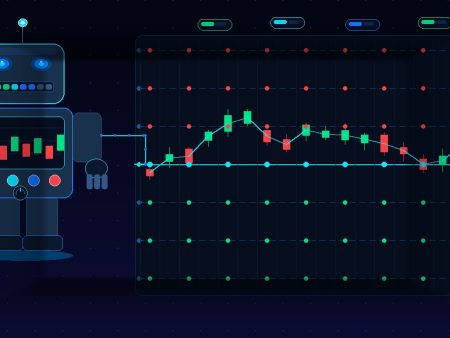
Prop firm accounts offer funded capital but impose strict rules that forex robots must navigate carefully to avoid disqualification.


Prop firm accounts offer funded capital but impose strict rules that forex robots must navigate carefully to avoid disqualification.

Prop firm rules create unique challenges for forex robot traders; drawdown limits, EA restrictions, and evaluation phases demand careful planning.
Proprietary trading firms, commonly known as prop firms, give traders access to funded accounts in exchange for a share of the profits generated. For automated traders, this arrangement presents a significant opportunity, a forex robot that passes the firm’s evaluation can trade a capital base far larger than most retail traders could fund independently. The challenge, however, is that prop firms impose a specific and non-negotiable set of rules that govern exactly how trading must occur on their accounts. Drawdown limits, daily loss caps, profit targets, minimum trading day requirements, and EA restrictions all create a regulatory environment that differs fundamentally from a standard retail trading account.
A robot optimized purely for performance on a personal account may violate several of these rules without the trader ever noticing until the firm terminates the account. Understanding the specific constraints that prop firms place on automated trading, and configuring EAs to operate within them before the evaluation begins, separates traders who pass and reach funded status from those who fail the challenge despite running a genuinely profitable strategy. This article covers the key rule categories every forex robot trader must understand before attempting a prop firm evaluation.
Most prop firms structure their funded account process as a two-phase evaluation. The first phase, commonly called the challenge, requires traders to reach a defined profit target, typically expressed as a percentage of the starting balance, within a set number of calendar days, without breaching any of the firm’s loss limits. The second phase, often called verification, repeats a similar process at a lower profit target to confirm that the first phase performance was consistent rather than fortunate.
For forex robots, the evaluation phase introduces a fundamental tension. The robot must generate enough profit to hit the target within the timeframe, but it must do so while keeping every daily and total drawdown figure within the firm’s limits simultaneously. A robot that trades aggressively enough to reliably reach the profit target in time may take on drawdown levels that breach the firm’s daily loss cap during a single bad session. Conversely, a robot configured conservatively enough to keep drawdown well within limits may trade too cautiously to reach the profit target before the time window closes. Therefore, traders must calibrate the robot’s risk settings specifically for the evaluation environment rather than simply attaching a standard configuration and hoping for the best.
The daily drawdown limit is one of the most commonly violated rules among traders attempting prop firm evaluations with automated systems. Most firms define this limit as a maximum percentage loss relative to either the day’s starting balance or the account’s overall equity high, the exact definition varies between firms and requires careful reading of each firm’s specific rule documentation before trading begins.
A forex robot that opens multiple positions simultaneously on correlated pairs during a volatile session can breach a 5% daily drawdown limit within a single morning if the market moves sharply against all open positions at once. The robot does not monitor the daily drawdown figure independently unless the developer has specifically built that functionality into the EA. Without a daily drawdown guard, the robot continues opening trades according to its signal logic while the account approaches and then crosses the firm’s limit, which triggers immediate account termination regardless of the account’s longer-term profit history.
Traders can address this gap by using a dedicated drawdown management EA or a trade copier tool that monitors the account’s daily loss in real time and pauses the main robot once the loss approaches the firm’s threshold. Additionally, some prop firm-specific EA configurations include a built-in daily loss cap input that the trader sets to a value below the firm’s limit, providing an automated safety buffer. Running the robot on a demo account that replicates the prop firm’s exact daily drawdown conditions before the evaluation provides the most reliable way to verify that the configuration handles worst-case intraday scenarios safely.
Beyond the daily loss limit, prop firms also enforce a maximum total drawdown cap that covers the entire evaluation period. This figure represents the largest cumulative decline the account can sustain from its starting balance or equity high before the firm terminates the challenge. A total drawdown limit of 10% on a $100,000 account means the account cannot fall more than $10,000 below its peak at any point during the evaluation or funded phase.
For forex robots, this total drawdown cap functions as an absolute ceiling that the strategy’s position sizing must treat as a hard constraint rather than a soft guideline. A robot using percentage-based position sizing needs its risk-per-trade percentage set conservatively enough that a realistic losing streak, based on the strategy’s historical maximum consecutive loss sequence, cannot consume more than the firm’s total drawdown allowance. Traders who calculate this figure before the evaluation begins rather than discovering the constraint after a drawdown event already threatens the account operate with a clear, quantified safety margin throughout the challenge.
Furthermore, traders should account for the interaction between the daily drawdown limit and the total drawdown limit simultaneously. A robot that hits the daily loss cap on three separate days consumes three separate portions of the total drawdown allowance. Treating each limit in isolation rather than tracking both together underestimates the true cumulative risk the account faces across a full evaluation period, particularly during extended sequences of difficult market conditions.
Many prop firms explicitly restrict or prohibit specific automated trading approaches in their terms of service. Martingale-based robots, which increase position size after losses to recover previous drawdowns, appear on the prohibited strategy list of a significant number of firms, because the exponential position growth during losing streaks carries catastrophic drawdown risk that conflicts directly with the firm’s loss limits. News trading, defined by many firms as opening positions within a defined window around high-impact economic releases, also faces restrictions on platforms that consider this approach to exploit temporary liquidity gaps rather than genuine directional analysis.
Latency arbitrage and tick scalping, strategies that exploit price feed discrepancies between data sources or target fills lasting only a few seconds, face the strictest restrictions of all, as most prop firms treat these approaches as incompatible with the execution environment their platform infrastructure provides. A forex robot that employs any of these restricted approaches faces account termination not because of performance failure but because of rule violation, regardless of how profitably the strategy trades during the evaluation.
Before beginning any prop firm evaluation with an EA, traders must read the firm’s full trading rules document and compare every rule against the robot’s specific trading behaviour. Contacting the firm’s support team to confirm that the robot’s approach falls within acceptable parameters provides an additional layer of certainty. Prop firms that clearly document their EA policies and respond helpfully to questions about specific robot behaviours demonstrate the transparency that distinguishes reliable funded account providers from those that enforce rules selectively.
Most prop firms require traders to be active on a minimum number of trading days during the evaluation period. This rule prevents traders from concentrating all their risk on a single large-volume day, hitting the profit target in one session, and presenting a result that does not represent sustainable, repeatable trading behaviour. For forex robots that include a session filter or trade only during specific market conditions, this minimum day requirement can create a situation where the robot’s selective trading schedule generates fewer active days than the firm demands.
Traders must verify that the robot trades frequently enough across the evaluation calendar to satisfy the minimum day requirement before the deadline. A swing trading EA that generates setups only two or three times per week may struggle to accumulate the required number of active trading days within a 30-day evaluation window that specifies a ten-day minimum. Adjusting the robot’s session filter to extend its active hours or pairing it with a second, higher-frequency EA on a separate pair provides a practical solution when the primary robot’s natural trade frequency falls short.
Some prop firms also enforce a consistency rule that caps the largest single trading day’s profit as a percentage of overall profits. This rule prevents traders from relying on one or two exceptional days to carry the entire evaluation. Forex robots that occasionally generate large outlier results on days with unusually strong trends need their position sizing checked specifically against this consistency threshold before the evaluation begins.
Prop firm evaluations offer genuine access to significant funded capital for traders whose forex robots can navigate the rule environment successfully. The opportunity is real, but so is the complexity, daily drawdown limits, total drawdown caps, EA strategy restrictions, minimum trading day requirements, and consistency rules all create constraints that a standard retail trading configuration does not account for automatically. Traders who read every rule carefully, configure the robot specifically to operate within each constraint simultaneously, verify behaviour on a demo account before the evaluation, and confirm their strategy’s compatibility with the firm’s EA policy directly give their robot the best available chance of passing the challenge and reaching funded status.
A forex robot that generates consistent, controlled performance within the prop firm’s rule framework demonstrates exactly the kind of disciplined, systematic trading behaviour that funded account providers exist to support. Treating the rule environment as a configuration challenge rather than an obstacle transforms the evaluation process from a stressful compliance exercise into a structured opportunity to prove the strategy’s reliability under well-defined conditions.
Also, take a look at the Reviews we have prepared for you!